Delhi's Trusted Solar Panel Company: Energizing Your Future
Choosing the right solar panel company in Delhi is an important decision because the quality of the installer can affect your system's performance, safety, savings, and long-term reliability. Comparing companies only on the basis of the lowest quotation can result in overlooked differences in system design, equipment quality, installation standards, warranties, and after-sales support.
A reliable solar installer should be able to evaluate your property, recommend an appropriate solar system, explain the expected generation and costs, handle installation professionally, and support you after commissioning. This guide explains how to choose a solar panel company in Delhi and what you should evaluate before signing an installation contract.
What Should You Check Before Choosing a Solar Company in Delhi?
Before selecting an installer, evaluate these factors:
- Solar EPC and installation experience
- Previous residential or commercial projects
- Solar panel and inverter quality
- System design and site assessment
- Installation and electrical safety standards
- Warranty and after-sales support
- Pricing and financial transparency
- Assistance with applicable subsidy and documentation
- Net-metering support where applicable
- Project timelines and commissioning process
A good solar company should provide clear answers to each of these points rather than focusing only on the headline system price.
1. Check the Company's Solar EPC Experience
Solar installation involves considerably more than mounting photovoltaic modules on a roof. A professional solar EPC provider typically manages multiple stages of a project, including:
- Site assessment
- Solar system design
- Module and inverter selection
- Structural planning
- Electrical installation
- Earthing and protection
- System commissioning
- Documentation
- Monitoring and after-sales support
When comparing installers, ask about their experience with projects similar to yours.
For a residential property, relevant experience includes rooftop constraints, household electricity consumption, available roof area, shading, structural considerations, and grid connectivity.
For commercial or industrial projects, you should additionally evaluate experience with larger systems, electrical infrastructure, project management, safety procedures, and operational requirements.
2. Review Previous Solar Installation Projects
A company's project portfolio can provide useful evidence of its practical experience.
Look for projects that are comparable to your requirements in terms of:
- System capacity
- Property type
- Roof configuration
- Installation complexity
- Location
- Commercial or residential application
Don't rely exclusively on photographs.
Ask whether the installer can explain the project's system size, equipment selection, expected generation, installation process, and commissioning.
A credible installer should be able to explain why a particular configuration was selected.
3. Evaluate Solar Panel Quality
Solar panels are one of the most visible components of a photovoltaic system, but the cheapest module is not necessarily the best choice.When comparing panels, consider:
Module efficiency: Higher efficiency can be useful when roof space is limited because more electricity can potentially be generated from the available area.
Technology: Depending on the application, you may encounter technologies such as:
- TOPCon
- HJT
- Mono PERC
- Bifacial modules
Each technology has different characteristics relating to efficiency, temperature behaviour, bifacial performance, degradation, and cost.
4. Don't Ignore the Inverter
The solar panels are only one part of a rooftop solar system.
The inverter converts the electricity generated by the modules into usable electrical power and plays an important role in system operation and monitoring.
When comparing installers, ask:
- Which inverter brand and model is being proposed?
- What is its rated capacity?
- What monitoring features are available?
- What warranty applies?
- How will inverter faults be handled?
- Is the system configuration appropriate for your roof and load?
A professional installer should explain the equipment selection instead of simply presenting a package price.
5. Ask for a Proper Site Assessment
A solar company should understand your property before recommending a system.
A site assessment should consider factors such as:
- Available roof area
- Roof orientation
- Roof inclination
- Shading
- Structural condition
- Electrical infrastructure
- Existing electricity consumption
- Future electricity requirements
- Access for installation and maintenance
The amount of electricity a solar system can generate depends on multiple factors. Therefore, a system should not be sized solely by
looking at the roof area.
Read More: How to calculate the rooftop area required to install solar panels
6. Compare Installation Standards, Not Just Equipment
Two companies can quote the same solar panel brand and still deliver substantially different installation outcomes.
Ask how the installer handles:
- Mounting structures
- Cable management
- Earthing
- Surge protection
- Electrical protection
- Waterproofing considerations
- Panel spacing
- Equipment accessibility
- Safety during installation
- Commissioning and testing
Installation quality matters because the solar system must operate safely and reliably for many years.
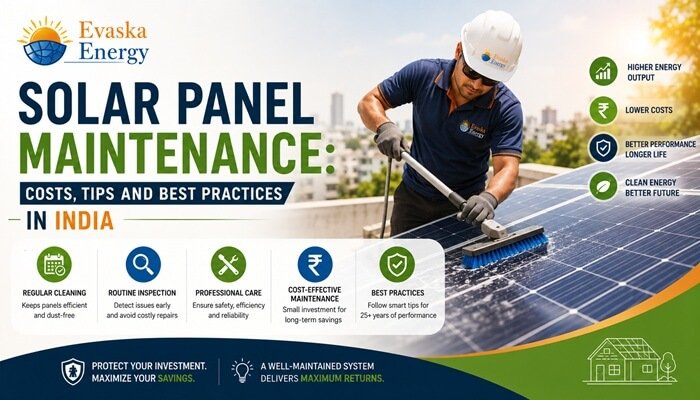
For additional guidance: Solar panel installation and maintenance at home
7. Understand the Complete Solar Installation Cost
Do not compare solar quotations based only on the final number. Ask each installer for a clear breakdown covering:
- Solar modules
- Inverter
- Mounting structure
- DC and AC cables
- Protection equipment
- Earthing
- Installation labour
- Engineering and commissioning
- Monitoring
- Applicable taxes
- Other project-related charges
A lower quotation may not represent the same system specification.
8. Check Warranty Terms Carefully
Solar systems contain multiple components, and each component may have different warranty conditions. Before signing a contract, understand:
- Product warranty
- Performance warranty
- Inverter warranty
- Installation/workmanship warranty
- Warranty claim process
- Service response process
Don't simply ask: "Does the system have a warranty?"
Ask: "What exactly is covered, for how long, and who handles the claim?"
9. Evaluate After-Sales Service
Solar installation is a long-term investment. After commissioning, you may need assistance with:
- Monitoring
- Fault diagnosis
- Inverter issues
- Performance concerns
- Maintenance
- Warranty claims
- Electrical problems
- System expansion
Ask the installer how service requests are handled.
Important questions include:
- Is there a dedicated service team?
- How can customers raise a complaint?
- What is the typical escalation process?
- Who handles warranty claims?
- Is system monitoring available?
A company that provides detailed information about post-installation support is generally easier to evaluate than one that focuses exclusively on installation.
10. Check Solar Subsidy and Documentation Support
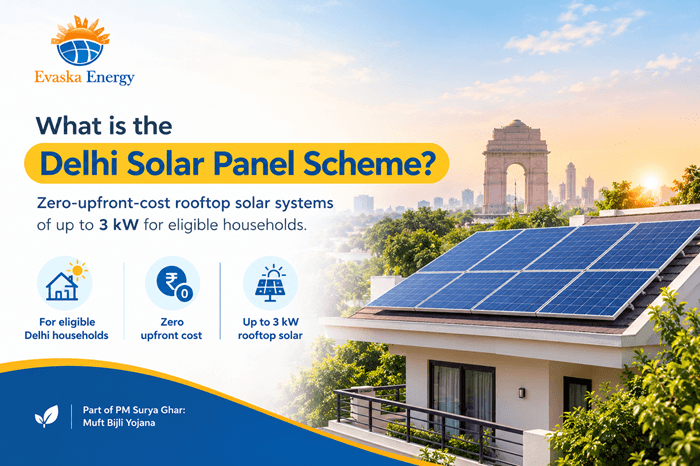
If your project qualifies for a government solar subsidy or incentive, understand exactly how the installer will assist with the process.
Ask:
- Which subsidy scheme applies?
- What eligibility conditions apply?
- Who handles documentation?
- What information must the homeowner provide?
- Which portal or authority is involved?
- What part of the process is handled by the installer?
Do not assume that every advertised subsidy amount applies to every system or property.
To know More: Solar panel subsidy and cost in Delhi
11. Understand Net Metering
For grid-connected rooftop solar systems, net metering can be an important part of the overall economics where applicable.
The basic concept is that electricity generated by your solar system can be used on-site, while eligible surplus electricity may be exported to the grid according to the applicable regulatory framework.The actual process, eligibility and applicable rules can vary.
To know More: Net metering for solar panels in India
How Much Should You Compare Solar Companies on Price?
Price is important, but it shouldn't be the only selection criterion.
A better comparison evaluates:
| Factor | Why it matters |
|---|---|
| System capacity | Determines potential generation |
| Module technology | Affects efficiency and performance |
| Inverter | Important for conversion and system operation |
| Mounting structure | Affects installation quality and durability |
| Electrical protection | Important for safety |
| Warranty | Determines long-term protection |
| Installation quality | Affects system reliability |
| Monitoring | Helps identify performance issues |
| After-sales service | Important for long-term support |
| Total project cost | Determines investment requirement |
The correct question is therefore not: Which company gives me the cheapest solar system?
It is: Which company provides the right system, equipment, installation quality, warranty and support for my requirements at a transparent total cost?
12 Questions to Ask a Solar Installer Before Signing
Before selecting an installer, ask:
- How many similar solar projects have you completed?
- What system capacity do you recommend and why?
- Which solar panels will you install?
- Which inverter will you use?
- What is the expected electricity generation?
- How was the system size calculated?
- What structural assessment is required?
- What electrical protection will be included?
- What warranties are provided?
- What does the installation cost include?
- Do you assist with applicable subsidy documentation?
- Do you assist with net-metering procedures where applicable?
- How does after-sales service work?
- Who handles warranty claims?
- What is the expected installation and commissioning timeline?
Getting clear answers to these questions makes it easier to compare competing quotations objectively.
Should You Choose a Local Solar Company in Delhi?
Working with a company that understands the local market can be useful because the installer may have experience with local installation conditions, regulatory processes, electricity requirements, rooftop characteristics and customer expectations.
However, "local" should not automatically mean "better."
Evaluate the company's:
- Technical capability
- Installation experience
- Project portfolio
- Equipment selection
- Safety standards
- Warranty
- Service support
- Pricing transparency
The objective should be to find a qualified solar EPC partner, rather than selecting a company solely because it operates nearby.
Why Choosing the Right Solar Installer Matters
A rooftop solar system is a long-term investment. The quality of the initial design and installation can influence:
- Electricity generation
- System safety
- Equipment reliability
- Maintenance requirements
- Warranty experience
- Long-term savings
For this reason, comparing installers before making a decision is as important as comparing solar panels.
If you are ready to evaluate available solar installation services, explore solar companies in Delhi and compare the services, experience and solutions relevant to your requirements.
Final Checklist: Choosing a Solar Company in Delhi
Before signing your solar installation contract, confirm:
- Company has relevant EPC experience
- Previous projects have been reviewed
- System capacity has been properly calculated
- Roof/site assessment has been completed
- Panel specifications are clearly documented
- Inverter specifications are documented
- Installation components are listed
- Electrical safety provisions are explained
- Warranty terms are clear
- After-sales support is documented
- Total project cost is transparent
- Applicable subsidy requirements are understood
- Net-metering process is understood where applicable
- Installation timeline is documented
- Payment terms are clear
Choosing a trusted solar panel company in Delhi requires more than comparing quotations. Evaluate the installer's EPC experience, system design approach, equipment quality, installation standards, warranties, documentation support and after-sales service.
A good installer should be able to explain what system you need, why it is appropriate for your property, how it will be installed, what it will cost, and what support you will receive after commissioning.
If you are comparing solar installation providers, you can explore Evaska Energy's solar solutions in Delhi and evaluate the services available for your requirements.