15 kW Off-Grid Solar System Loni Ghaziabad
The case study describes how a 15 kW off-grid solar power installation was installed in a commercial office building. The primary objective of the project was to minimize the expensive electricity bills and to control the common power cuts without the use of diesel generators.
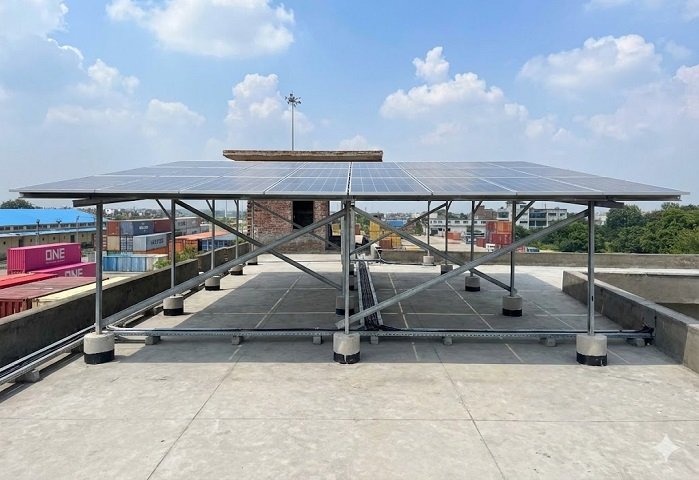
The system consists of 25 Vikram Solar panels (600 W each) and a Statcon Energiaa 15 kVA inverter (120 V system). It generates approximately 60 units of electricity per day, which is sufficient in covering most of the electricity requirements in the office during the day. As the office is primarily in use during the day, no batteries were fitted, which makes the system simple, cheap, and easily serviced.
Background and Requirement
The office had two critical issues before the installation of solar power.
To begin with, the power charges were quite exorbitant. The office was charged more tariffs as a commercial connection and monthly costs continued to rise. Most of the electricity was used in illumination, computers, air-conditioners, and other office appliances.
Second, there were frequent power cuts in the area particularly during summer. Such disruptions impacted the routine operations and had to resort to a diesel generator which raised the fuel prices, noise and pollution.
In order to address them, the management sought a long term and stable solution. They then considered various alternatives and settled on an idea to have a solar power system installed to save on the expenses and to have constant power supply even when they were at work.
Project Objectives
The following clear goals were made in the project plan:
- Aiming at cutting down monthly electricity bills.
- To prevent the use of diesel generators in case of power cuts during the day.
- To install a low maintenance eco friendly system.
- To get rapid installation and rapid payback.
System Design and Planning
Having visited the site and analyzed the energy consumption of the office, engineers suggested a 15 kW off-grid solar system.
The system was not developed with batteries since the office operates most of the day and the office is under the sun so there is no need to use a battery. There was minimal use of electric power at night and therefore there was no need for energy storage. This choice contributed to saving initial cost and maintenance in the future.
Main System Components
- Solar Panels: 25 Vikram Solar panels with 600 W each with a total capacity of 15 kW. These are very efficient panels that are applicable to the Indian weather.
- Inverter: Statcon Energiaa 15 kVA inverter with 120 V DC system that transforms solar DC power into useful AC power.
- Mounting Structure: GI mounting structures are strong and rust-resistant that are mounted at the right angle to maximise sunlight.
- Safety Equipment: DC and AC isolation, surge suppressors, earthing and fuses to make the entire electrical system safe.
Installation Process
The whole installation process took approximately three weeks.
- Rooftop Inspection: The roof was inspected on its strength and cleaned up to hold the solar panels in place.
- Installation of the Mounting: The mounting frames were attached at the right angle and direction.
- Fixing of panels: All the 25 panels have been fixed and joined in the right strings.
- Electrical Work: DC cables of high quality were applied and the inverter was placed in a shaded and well-ventilated place.
- Safety Tests: Earthing, surge protection and wiring were checked.
- System Commissioning: The system was turned on and checked to be operating steadily during the day.
System Power Production and Performance
The system was commissioned, after which it began to produce an average of 60 units per day, depending on the sunshine and weather conditions.
This equals approximately:
- 1,800 units per month
- 21,600–22,000 units per year
This solar energy energizes the office directly throughout the day and greatly cuts the power consumption that is obtained via the grid.
Consequently, the office saves approximately 16000-18000 per month in electricity expenditure. According to these savings, the payback period is calculated to be 4-5 years. The office will have many years of cheap electricity as the system life is more than 25 years.
Benefits Achieved
- Major Cost Reduction: Electricity costs were also reduced by about 4050 and this assisted the office to save on the monthly running costs.
- Reliable Daytime Power: The system offers uninterrupted power throughout the day even in situations where the grid supply has failed and the system does not require the use of diesel generators.
- Very Low Maintenance: Maintenance is low without batteries. Regular panel cleaning and basic checkups are only required.
- Environment-Friendly Solution: The system generates more than 21,000 units of clean energy per year and saves almost 20 tons of CO 2 emissions annually, which is equivalent to planting 700-800 trees.
- Improved Work Environment: The workers have acquired continuous power, reduced noise, and their working environment is cleaner, which contributes to improved productivity.
Client Feedback
The client was highly pleased with the quality of the performance of the system and its quality of installation. According to the management: We have been saving on electricity bills and there is no more day time power cut. The solar system has been operating without any problems since the very beginning. The client is pleased with the outcomes and is willing to increase the system in the future and has advised the local businesses to use solar power.
Financial Summary
|
Parameter |
Details |
|
Installed Capacity |
15 kW |
|
Daily Generation |
~60 units |
|
Monthly Generation |
~1,800 units |
|
Annual Generation |
~21,600 units |
|
Annual Savings |
₹1.8–₹2 lakh |
|
Payback Period |
4–5 years |
|
System Life |
25+ years |
|
Maintenance |
Very low |
|
Battery Backup |
Not included |
|
Installation Time |
3 weeks |
Key Takeaways
- Solar systems that do not use batteries are effective during the day in offices.
- Good quality panels guarantee good power production.
- Off-grid systems offer power cut independence.
- Minimal maintenance saves on long term expenses.
The off-grid solar system of 15 kW turned out to be an economical, stable and viable source of energy to the office. It lowered the electricity bill, minimized the use of generators in the daytime, and contributed to the preservation of the environment.
This project makes it clear that without significant investment in batteries, businesses can still embrace the use of solar power and still record good performance and financial returns. The fact that this installation was successful underscores the fact that solar energy is not just environmentally friendly but is also a smart business move.