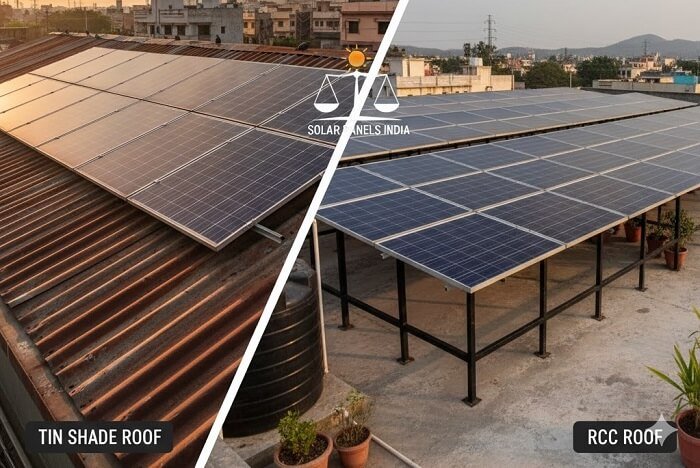
Tin Shade VS RCC Roof for Solar Panels India
With its ambitious target of 500 GW of solar by 2030, the drilling of rooftop systems is on a boom in India in initiatives like PM Surya Ghar. Not any body of roofs is equal to solar panels. The metal sheets (tin shade roofs) (typical in rural houses and factories) and the RCC (reinforced cement concrete) slabs (typical in urban buildings) have their own pros and cons. The option influences cost of installation, efficiency, durability as well as maintenance. Organisations with subsidies of up to 78,000 per kW can find the appropriate technology that will see your system break even in 3-5 years depending on the type of roof chosen. This guide is a comparison of the two based on the factors in the real world such as climatic conditions and building standards in India.
What is a Tin Shade Roof?
Lightweight and slanted structures whose roofs are raised between 8-12 feet in the air are known as tin shade roofs usually made of galvanised iron (GI) or sheets of corrugated metal. They are used in warehouses, sheds and low-cost houses, and offer easy shelter, however, being prone to overheating during summers and producing excessive noise during monsoons. In the case of solar, such roofs are perfect in the commercial applications such as factories in Gujarat or Maharashtra where space is not a problem and budget constraints are. They can withstand wind up to 150kmph when anchored appropriately in line with the BIS requirements of solar mounts.
What is an RCC Roof?
RCC roofs are flat or low-sloped slabs of concrete reinforced with steel bars and are the primary support of the modern apartments and houses in the cities such as Mumbai or Delhi. They are constructed to last long and withstand heavy loads (up to 150-200 kg/m 2), fire, pests and earthquakes. They are, however, more expensive to build and are likely to leak unless waterproofed. RCC is solar-friendlysolar friendly in residential complexes where beauty is a concern and both flush and tilted mounts can be used to ensure that it is oriented towards the south.
Procedural Installation: Tin Shade
Solar can be easily and quickly installed on tin roofs. Clamps or S-hooks are used on the roof using purlins (support) without having to drill holes, which maintains the integrity of the sheet. Panels are attached to raises (rails of anodised aluminium) at a 10-15 degree inclination to yield better. A 3kW system requires minimum labour and it only takes 1-2 days. Chemical anchors are not needed just torque the clamps 10-15 Nm. Install bird-proofing meshes after installation. This is a non-penetrative technique which eliminates rust or leakage, which is very important in the wet coast such as Kerala.
Installation Process: RCC Roof
RCC demands more prep. Fix L-bolts by making holes on the concrete or apply epoxy anchors, and then affix MS or aluminium frames. The panels are mounted at angles of 15-25 o C in order to capture maximum sunlight particularly in northern India. Waterproofing coverings (silicone or PU) eliminate leakages - essential in the times of heavy precipitation. An installation of 3kW takes 2-4 days, with structural inspection to make sure that the 100+ life of the slab is not compromised. Engage qualified installers to avoid cracks due to uneven loads as required in CEA guidelines.
Advantages and strengths of Tin Shade against Solar
Pros:
- Quick and cheap: Installation 15-20 per watt; system 3kW below 1.5 lakh after subsidy.
- Lightweight: Does not add much to the sheds (5-10 kg per panel) and is suitable to older sheds.
- Ventilation: Elevated cools panels which allows the loss of efficiency of 2-5 percent of hot zones such as Rajasthan.
- Accessible: It does not require climbing the roof in order to perform ground level maintenance.
- Green: In most cases, recycles metal, which is also eco-friendly.
Cons:
- Heat Reflection: Metal reflects the sunlight, which may overheat panels (5-10% output drop during peak summer).
- Bifacial Limits: There is no reflection on rear-side gains on bifacial panels.
- Durability Problems: Rust; requires galvanised finishes.
- Noise and Beauty: Monsoon drumming is annoying; homes less sleek to look at.