Reliance Solar Panels Types Guide
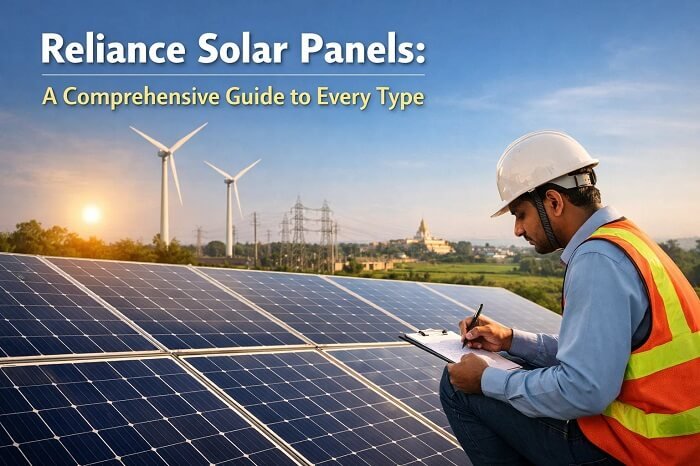
Reliance New Energy, a key arm of Reliance Industries Limited (RIL), has quickly become one of India's most prominent solar panel manufacturers. With its massive integrated manufacturing facility in Jamnagar, Gujarat, Reliance produces advanced high-efficiency modules using cutting-edge HJT (Heterojunction Technology). As of 2026, all Reliance panels are ALMM-listed, fully eligible for central and state subsidies under schemes like PM Surya Ghar: Muft Bijli Yojana, and backed by strong 30-year performance warranties. They cater to residential rooftops, commercial & industrial (C&I) projects, and large-scale solar plants.
This guide provides a detailed overview of every Reliance solar panel type available in 2026, including specifications, key features, benefits, pricing insights, and why they perform so well in Indian conditions.
Why Choose Reliance Solar Panels in 2026?
Reliance's end-to-end manufacturing—from polysilicon to finished modules—ensures consistent quality, cost competitiveness, and rapid innovation. Their panels stand out with:
Module efficiencies up to 23.1-25.5% at cell level. Bifacial designs that capture light from both sides for 10-30% extra yield on reflective surfaces. Very low temperature coefficient (-0.24%/°C), minimizing power loss in India's hot climate. Annual degradation as low as 0.3%, ensuring high output over decades.30-year linear performance warranty (typically 90.3% output at year 30).Robust glass-glass construction for durability against dust, humidity, and extreme weather. Reliance panels are "Made in India" and DCR-compliant where required, making them a preferred choice for subsidy-linked installations.
Main Types of Reliance Solar Panels
Reliance focuses on high-power HJT-based modules, with power outputs ranging from 570Wp to 760Wp+ per panel.
The Pro-L Series (HJT Bifacial, 690-720Wp) serves as the flagship for most residential and small commercial applications. These panels achieve up to 23.1% efficiency, measure approximately 2,386 × 1,305 × 30 mm, and weigh around 38.3 kg. They feature half-cut G12 cells, excellent low-light performance, and PID-free design. Bifaciality exceeds 90%, allowing significant rear-side generation when mounted on white or reflective roofs. This series is ideal for space-constrained rooftops, where fewer panels deliver higher total output compared to older 350-400W modules.
The Pro-XL Series (HJT Bifacial, 740-760Wp) is designed for larger-scale installations requiring maximum power per panel. With efficiencies around 22.5%, these larger-format modules (about 2,597 × 1,305 × 30 mm, ~42 kg) suit ground-mounted systems, commercial rooftops, and utility projects. They maximize energy harvest in limited footprint areas and reduce balance-of-system costs by needing fewer panels and connections.
The Tapi Series offers a more accessible high-performance line, with power ratings of 570-625Wp and efficiencies of 22-23.5%. These often feature dual-glass construction and are suited for both residential and C&I setups. They provide excellent durability in dusty or humid environments, making them popular for Indian conditions. Reliance also supplies specialized variants for floating solar projects, agrivoltaic applications, and monofacial options for specific needs. All models incorporate advanced cell technologies to minimize losses and maximize yield.
Pricing and System Economics (2026)
When it comes to buying solar panels, the cost is a big factor. In 2026, Reliance solar panels are still pretty affordable in India. The price of just the panels can range from ₹18 to ₹24 per watt, depending on the type, how efficient they are, and how many you buy. If you want to install a complete 3kW system for your home, it will cost between ₹1.80 and ₹2.20 lakhs before you get any subsidies. This price includes the panels, an inverter, mounting structures, electrical components, labor, and help with net-metering.
But here's the thing: with the government's PM Surya Ghar: Muft Bijli Yojana subsidy, you can get up to ₹78,000 off if you buy a system that's 3kW or bigger. So, the actual cost would be more like ₹1.10 to ₹1.50 lakhs. In places that get a lot of sunlight, like Rajasthan, Gujarat, Andhra Pradesh, and Delhi-NCR, you can expect to break even on your investment in 3 to 4.5 years. After that, you'll be making electricity at a low cost for over 25 years, which means you'll save money and be protected from rising power prices.
Warranty and Reliability
Reliance also offers a pretty good warranty. You get 12 to 15 years of coverage for manufacturing defects and material issues, which gives you peace of mind. Plus, most of their panels come with a 30-year performance warranty, so you know they'll keep working well over time. And with Reliance Industries Limited's nationwide infrastructure, you can count on getting good after-sales service and technical support.
So, who are these panels for?
Well, the Pro-L series is great for homes and apartment buildings that need a system between 1.3kW and 5kW. These panels are designed to be super efficient, even in small spaces, so you can get the most out of your rooftop.
For commercial and industrial installations, like factories, schools, and office buildings, the Pro-XL and Tapi series are the way to go. They're designed for higher capacity needs and can help reduce land usage and installation costs.
How to Get Reliance Panels Installed
If you're looking for a solar company in Gurgaon, Greater Noida, Faridabad, or Ghaziabad and want to get Reliance panels installed, you should work with a certified local EPC provider. They'll make sure your system is designed right, that you get genuine products, and that you comply with all the regulations. They'll also help you with net-metering approval and make sure you get all the subsidies you're eligible for.
Whether you're in Gurgaon, Greater Noida, Faridabad, or Ghaziabad, there are plenty of experienced providers who can give you a turnkey solution that includes design, installation, documentation, and warranty registration.
In the end, Reliance Solar Panels are a solid choice because they use advanced technology, are durable, and can save you money. As India keeps working towards its renewable energy goals, high-efficiency modules like these are going to play a big role in getting more people to use clean power. With the government's subsidies, falling installation costs, and rising electricity tariffs, 2026 is a great time to invest in rooftop solar. Just make sure you choose a good partner and quality modules, and you'll be set for long-term savings, energy independence, and sustainable growth.